

Estate Prime · Japan Real Estate Advisory
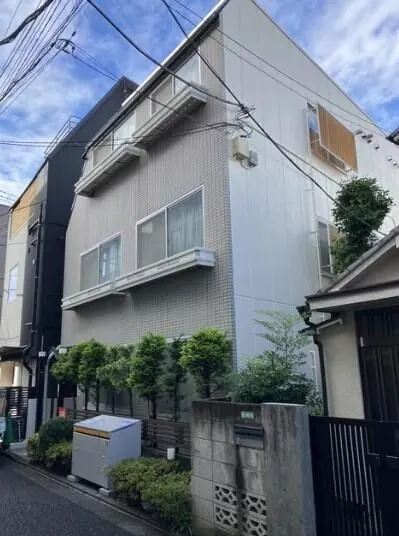
Oizumi-gakuen income block — 3-storey steel, 9 units, fully let
4 min from Oizumi-gakuen, all 9 units let, rents about 20% below the station average
Higashi-oizumi 6-chome, Nerima-ku, Tokyo
Price
¥120M
JPY
Monthly rent
51.3
×10k JPY/mo
Yield
5.13
%
Type
Apartment
≈ HKD
…
≈ TWD
…
≈ CNY
…
Advisor Perspective · HK Buyer Focus
Estate Prime Advisor View
Advisor View 01
Rents sit about 20% below the station average — full occupancy is bought, not lucky
Annual income of ¥6,156,000 across 9 units works out at about ¥57,000 per unit per month. Average rents within a 10-minute walk of Oizumi-gakuen are ¥72,400 for a studio and ¥85,100 for a 1K (LIFULL HOME'S, July 2026). Current rents therefore run roughly 20% below the station-area studio average. The site photographs also show a "free internet" sign at the entrance — building-wide internet included is a real draw for tenants of small units, and at ¥57k a month it sharpens the offer further (confirm with the seller whether it covers every unit and who bears the cost). Read that both ways. Positively: pricing below the local average is itself vacancy insurance — "fully let" is not luck, it is the result of competitive rents, and it explains how a 27-year-old block holds full occupancy. Each move-out is then a chance to test the rent. Conservatively: the area average includes newer and larger stock, while this building is 27 years old with small units (207.54sqm over 9 units is about 23sqm of gross floor area each, implying roughly 18–20sqm of exclusive area; the seller's notes explicitly say "exclusive area: unknown"). Sitting below the average is therefore a fair position, not evidence that rents can simply be lifted to it. The only way to judge real reversion potential is to obtain the rent roll — current rent, lease term and most recent letting level for each unit — and compare it with actual lettings of the same age and size band nearby, not with the station average.
Advisor View 02
External walls and roof waterproofing done in May 2025 — the seller has paid the decade's biggest bill
The seller's notes record that external wall and roof waterproofing works were completed in May 2025. It is easy to read that line as decoration, but for a 27-year-old steel-framed block it is one of the most substantial facts in the whole listing. Repainting and roof waterproofing typically run on a 10–15 year cycle, and for a building of this size a cycle costs roughly ¥3M–5M — the equivalent of seven to ten months of the entire building's rent. Having been done in May 2025, the next cycle falls around 2035, so a buyer faces at least five to ten years without that lump sum landing. For a building that looks old on paper, this materially narrows the uncertainty around early cash flow. What to obtain before purchase: the works report, a breakdown of what was actually covered, and the warranty (waterproofing work usually carries a five to ten year guarantee) — and confirm whether the warranty transfers with the property. Also ask for the condition of the steel frame's anti-corrosion treatment: the expensive failure mode in a steel building is frame corrosion, not paintwork, and it is usually inspected in the course of exterior works.
Advisor View 03
Land is about a third of the price — real value sits under the building as it depreciates
On the 2026 published land-price average around Oizumi-gakuen of ¥435,062/sqm (tochidai.info compilation of MLIT published land prices, 2026, up 5.18% year on year), the 98.57sqm site is worth roughly ¥42.9M — about 36% of the ¥120M price. Against newer blocks where land is only 10–20% of the price, that share means real land value sits under the asset once the building has depreciated away. This is the core compensation for buying older stock. One caveat, stated plainly: that figure is an area average, and averages assume normal road access. A site reached only by a 2.7m private lane is in practice valued at a discount to it, and a larger discount again if rebuilding is restricted. So the "36% land" cushion is conditional, and the condition is the answer to the note below on the 2.7m private lane. Separately, 207.54sqm of floor area over a 98.57sqm site works out at about 210% floor-area utilisation. Neighbourhood Commercial zoning typically allows 200–300%, so the site is already close to capacity and there is limited scope to add value by extending. Coverage and FAR are undisclosed by the seller and must be verified.
Advisor View 04 · Risk disclosure (must read)
⚠️ One question decides this deal: what kind of road is that 2.7m private lane?
Risk: the seller states "access: private road on the west side (2.7m wide), no position designation." That phrase only rules out a designated road under Building Standards Act art. 42(1)(v). It does not mean there is no legal road: the lane may still be an art. 42(2) deemed road — a sub-4m way already built up when the Act took effect in November 1950 and designated as such by the authority. The two cases differ enormously. If it is an art. 42(2) road: rebuilding is possible, but any new building must set back to 2m from the road centreline. At 2.7m today that is about 0.65m each side; the set-back strip counts toward neither coverage nor floor-area ratio, cutting roughly 4–5sqm from the effective 98.57sqm site. That is a cost you can quantify and accept. If it is neither: the site falls under the art. 43(2) approval regime, rebuilding requires case-by-case consent, lenders generally will not write a mortgage, and the land must be valued well below the area norm. In that case the ¥120M asking price needs to be revisited from scratch. Discount: 5.13% against roughly 4% for newer blocks in the same ward is the market's compensation for this uncertainty and the building's age — but that pricing assumes the first case. If the second is true, the discount is not nearly enough. Action: do not make an offer before you have this in writing. File a road-classification enquiry with Nerima Ward's building division (which establishes whether the lane is an art. 42(2) road, an art. 43(2) approved passage, or not a statutory road at all), and obtain the road investigation section of the disclosure statement together with the private road's ownership record and the passage and excavation consents. Negotiate only once those three documents are in hand.
Advisor View 05 · Risk disclosure (must read)
⚠️ 27-year-old steel frame: almost no statutory life left — in practice, a cash buyer's asset
Risk: Japanese bank loan tenors are capped by statutory useful life. For steel-framed residential buildings that life depends on frame thickness — 34 years above 4mm, 27 years for 3–4mm, 19 years at 3mm or below. Built October 1998 and about 27 years old, this building has roughly 7 years left if heavy-gauge (over 4mm), and none at all if it is light-gauge 3–4mm steel. On a 7-year loan, debt service far exceeds the ¥6.16M of annual income: buying this with leverage means negative cash flow. Discount: that is precisely why a fully-let building 4 minutes from the station is priced at 5.13% rather than the low 4s of newer concrete stock nearby. The extra point is the price of difficult financing, not a bargain. Action: obtain the building certification records and structural drawings to establish which thickness band applies. If you intend to use leverage, secure pre-approval from a lender that writes loans beyond statutory life (shinkin banks, credit unions, non-banks), put the real term and rate into a debt-service-coverage calculation, and set your offer from that. For an all-cash purchase the constraint bites far less — but your eventual buyer faces the same limit, so price it into the negotiation.
Investment Highlights
Investment Highlights
4 min walk to Oizumi-gakuen on the Seibu Ikebukuro Line, 13–14 min to Ikebukuro by semi-express. All 9 units are currently let, producing ¥6.156M/yr (¥513k/mo) — a 5.13% gross yield
Entry around HK$5.76M. Current rents average about ¥57k per unit per month, roughly 20% below the ¥72.4k station-area studio average (LIFULL HOME'S, July 2026) — competitively pitched, with correspondingly low vacancy risk
External wall repainting and roof waterproofing were completed in May 2025 — the single largest capital item a small block faces over a decade, already paid for by the seller
Freehold land of 98.57sqm (about 29.81 tsubo); on published land prices around Oizumi-gakuen that is roughly a third of the purchase price, a higher land backing than a typical newer block
⚠️ Access is via a 2.7m private road with no position designation, and the steel-framed building is 27 years old with little statutory life left — these two points decide whether it can be rebuilt or financed. See the advisor notes
Market Context
Nerima Ward's 2026 published land price averages ¥567,453/sqm, up 6.68% year on year (residential +6.23%, commercial +8.90%). Around Oizumi-gakuen the average is ¥435,062/sqm, up 5.18% (tochidai.info compilation of MLIT published land prices, 2026). Oizumi-gakuen sits in the western part of the ward, below the ward average and below the Fujimidai/Nakamurabashi area on both level and growth — the classic outer-district profile of a lower entry price with more modest appreciation. On income assets, whole buildings in Nerima generally trade between 4% and 5% gross: newer concrete in the low 4s, older timber and steel stock at 5–7% (asking levels on Kenbiya and Rakumachi, August 2026). At 5.13% this asset sits at the low end of the older-steel band — meaning the market has already paid a premium for "4 minutes from the station" and "fully let", and may not have fully priced the private-road access. That is a fair point to raise in negotiation, but only once the road classification has been answered in writing.
Financial Analysis
Financial Analysis & Cash Flow
Currency Conversion · HKD First
Currency conversion (¥120M)
HKD$ (primary)
…
HKD$
CNY¥
…
CNY¥
USD$
…
USD$
TWD$
…
TWD$
Investment calculator
(Indicative only — consult an advisor for actual figures)Scenario Return Comparison & Analysis
Scenario Return Comparison & Analysis
| Scenario | Annual (est.) | Monthly (est.) | Gross yield | Leveraged* |
|---|---|---|---|---|
| Long lease, fully let (current, gross) | ¥6.16M/yr | ¥513k/mo | 5.13% | 10.26% |
| ⚠️ Net of operating costs (20% cost ratio assumed) | ¥4.93M/yr | ¥410k/mo | 4.10% | — |
| ⚠️ Stress case: 1 unit vacant (89% occupancy) + 20% costs | ¥4.38M/yr | ¥365k/mo | 3.65% | — |
* Leveraged yield assumes a 50% loan, computed on the actual equity outlay (¥60M) before loan interest. However, this is a steel-framed building with little statutory life remaining, and mainstream bank tenors on such assets are very short — the 10.26% figure is arithmetic, not an indication of financing actually obtainable. See the final advisor note, on statutory useful life.
* The 5.13% gross is the seller's published full-occupancy income of ¥6,156,000 divided by the ¥120,000,000 price. The seller records the building as tenanted and fully let, so that figure should equal current actual income — but it must still be verified unit by unit against the rent roll (current rent, lease dates, deposits, renewal timing).
⚠️ The 20% cost ratio used for the "net" line is an industry estimate for a small block (management fees, common-area electricity, cleaning and maintenance, insurance, fixed-asset and city-planning tax, repair provision). With exterior and waterproofing works completed in May 2025, near-term repair costs should run below those of a typical 27-year-old building — but property tax must be checked against the seller's most recent tax notice.
⚠️ The stress case assumes 1 of 9 units vacant (89% occupancy) alongside the 20% cost deduction. Across only 9 units a single vacancy costs about 11% of annual income — less diversified than a larger block, and worth building into any cash-flow estimate.
The structure of this deal is unusually clear: a well-located asset with cash flow already running, attached to one unresolved legal question. The location is not in dispute — 4 minutes from Oizumi-gakuen, 13–14 minutes to Ikebukuro by semi-express, all 9 units let, with rents pitched about 20% below the station average, which means vacancy risk has effectively been bought out through pricing. Exterior and roof waterproofing works were completed in May 2025, so the largest capital item is off the table for the next five to ten years. Land accounts for roughly a third of the price, leaving real value underneath once the building has depreciated. The unresolved question is whether the 2.7m private lane on the west side is a statutory road. If it is an art. 42(2) deemed road, a 0.65m set-back makes rebuilding possible and the whole case holds together. If it is not, rebuilding requires case-by-case approval, mortgages become hard to place, land value must be marked down, and the ¥120M price needs recalculating. At the same time, 27 years on a steel frame leaves little statutory life, so a leveraged purchase will struggle to produce positive cash flow. So: this suits a buyer paying cash or using low leverage, who values location and stable income, and who is willing to spend the time and fees confirming the road classification at the ward office before making an offer. It does not suit anyone relying on bank finance to amplify returns, or anyone who wants to decide quickly — until the road classification is answered in writing, any offer is a guess. Our advice is simple: verify first, negotiate second.
✅ Strengths
- ·4 min walk to Oizumi-gakuen, 13–14 min to Ikebukuro by semi-express
- ·All 9 units currently let — income already running
- ·Rents ~20% below the station average, so vacancy risk is low
- ·External walls and roof waterproofing completed May 2025
- ·Freehold 98.57sqm site, roughly a third of the price
⚠️ Weaknesses
- ·Access only via a 2.7m private lane with no designation — rebuildability unclear
- ·27-year-old steel frame: almost no statutory life, so very short loan tenors
- ·Seller states unit areas are unknown; coverage and FAR undisclosed
- ·Only 9 units — one vacancy costs about 11% of annual income
- ·No interior photographs or floor plans released — unit condition unverified
🔵 Opportunities
- ·Rents can be tested upward on each turnover, given the gap to the area average
- ·If confirmed as an art. 42(2) road, a 0.65m set-back restores rebuildability and removes the uncertainty
- ·Neighbourhood Commercial zoning gives more long-run use flexibility than residential land
- ·Land around Oizumi-gakuen up 5.18% year on year
🔴 Threats
- ·If it is not a statutory road, both land value and liquidity are hit at once
- ·The useful-life limit constrains the next buyer too, weakening bargaining power at exit
- ·Frame corrosion is the main long-term risk in steel construction and needs professional inspection
Discuss investment feasibility
Estate Prime arranges due diligence, site inspection and full purchase support.
Contact us → estateprime.netNeighborhood & Lifestyle
Neighborhood & Lifestyle
Oizumi-gakuen is one of the main stations at the western end of Nerima on the Seibu Ikebukuro Line: 13–14 minutes to Ikebukuro by semi-express, about 20 by local, with an interchange to the Toei Oedo Line at Nerima and Seibu Yurakucho Line through-services onto the Yurakucho and Fukutoshin lines. Retail is concentrated at the station, including Grand Emio Oizumi-gakuen, making this a typical commuter district — convenient, and noticeably cheaper to live in than the centre — with tenants mainly single office workers and younger households, matching this building's nine small units.
On the seller's "three stations available" headline, plainly: Hoya is a 21-minute walk and Shakujii-koen 28 minutes, neither of which is a realistic option on foot. The value is the 4 minutes to Oizumi-gakuen. One station described honestly serves the buyer better than three stacked up — and 4 minutes to Oizumi-gakuen alone is enough to support letting demand.
One thing to inspect on site is the frontage itself: a 2.7m private lane is difficult for fire appliances to enter and awkward for removals and large furniture, which feeds through into achievable rents and tenant profile — and is the root of the rebuilding question above. When viewing, look at the lane's surfacing, whether passage is obstructed, and how the other households along it use the access.
Roads and rebuilding: access is via a 2.7m private road on the west side with no position designation. The Building Standards Act requires a building site to front a road at least 4m wide over a length of at least 2m; a way narrower than 4m counts as a road only if the authority has designated it under art. 42(2), in which case rebuilding requires setting back to 2m from the centreline. The seller's materials do not say which category applies, so a road-classification enquiry to Nerima Ward is essential — it determines both whether the site can be rebuilt and whether a lender will write a mortgage, and is the single highest-priority item of due diligence here.
Minpaku and lodging: under Nerima Ward's ordinance on private lodging, operation is permitted ward-wide up to the 180-day annual cap, with an additional restriction in exclusive-residential zones limiting operation to Friday noon to Monday noon and around public holidays. This site is Neighbourhood Commercial and falls outside that time restriction. However, the building is currently fully let on long leases, so any short-let use would first require ending those tenancies and meeting fire-safety equipment requirements — and a 2.7m lane may itself be an obstacle in the fire and evacuation review. Approval depends on the authorities' actual review; no guarantee is made, and we recommend confirming with Nerima Ward's public health office and the fire department before purchase.
Apartment-building rules: Nerima Ward's town-planning ordinance regulates one-room apartment buildings, but only those of 15 units or more; at 9 units this building is outside its scope. Should a future rebuild aim for 15 units or more, the ordinance's 25sqm minimum unit area and ancillary-facility requirements would apply — which on a 98.57sqm site is difficult to achieve in practice. In other words, a rebuild would most likely yield fewer than the current 9 units.
Property Specifications
Property Specifications
Overview
Area & Land
Zoning & Facilities
Financials
Data Notes & Verification
Data Notes & Verification
Top due-diligence priority: road classification. Access is via a 2.7m private road on the west side with no position designation. That phrase only rules out a designated road under Building Standards Act art. 42(1)(v); it does not mean the lane is outside the Act — it may still be an art. 42(2) deemed road. If it is, rebuilding requires a set-back to 2m from the centreline (about 0.65m each side at the current 2.7m), and the set-back strip counts toward neither coverage nor floor-area ratio. If it is not a statutory road, the site falls under the art. 43(2) approval regime, rebuilding needs case-by-case consent, and lenders generally will not write a mortgage. Buyers should file a road-classification enquiry with Nerima Ward and obtain written confirmation before deciding.
Building coverage and floor-area ratio are undisclosed by the seller (the portal shows "----"), as are the individual unit areas: the seller's notes state explicitly that the exclusive area is unknown, and the portal's "10sqm–10sqm" is a system placeholder that should not be relied on. The figures cited on this page — about 23sqm of gross floor area per unit and roughly 18–20sqm exclusive — are derived from 207.54sqm over 9 units and are estimates, not measurements. The survey drawings and disclosure statement prevail.
The 5.13% gross is full-occupancy income of ¥6,156,000 divided by the ¥120,000,000 price. The seller records the building as fully let, but actual rents, lease terms and occupancy must be verified against the rent roll. The "net" and "stress case" rows of the scenario table use an assumed 20% cost ratio and 89% occupancy as estimates — they are neither seller-published figures nor forecasts.
Statutory useful life for a steel-framed building depends on frame thickness (34 years above 4mm, 27 years for 3–4mm, 19 years at 3mm or below). Which band applies here must be confirmed from the building certification records and structural drawings, and it directly determines the loan tenor obtainable. The May 2025 external wall and roof waterproofing works are as recorded in the seller's notes; obtain the works report and warranty to verify.
Walking time: the current listing states a 4-minute walk to Oizumi-gakuen, but the same property was previously listed on another major portal as a 6-minute walk. The seller notes that distances are measured from the building entrance, which does not fully account for the gap. This page uses the 4 minutes given in the current listing; buyers should verify on foot.
Photographs: the images on this page are reproduced with the handling agent's permission — four in total (two exterior, one entrance passage, one of Oizumi-gakuen Station). The seller has released no interior photographs or floor plans; request these from the handling agent before viewing.
Other: residential land within an urbanisation promotion area; sold and handed over in present condition. The seller notes that ancillary conditions or additional charges may arise, and these should be confirmed item by item. Transaction type: brokerage (agent: BF Estate Co., Ltd., Tokyo Governor (3) No. 98601). Listing no. 4524289vy9, information updated 8 June 2026. Where drawings differ from actual condition, actual condition prevails.
epc Estate Prime
Japan Real Estate Advisory
Estate Prime is a boutique advisory focused on Japanese real-estate investment, serving high-net-worth investors from Hong Kong, Taiwan and Mainland China. With deep knowledge of the Japan market — hotel/ryokan regulation and the minpaku system — we provide a one-stop solution from sourcing to purchase and ongoing management.
Selected Tokyo income properties matched to your goals
Assessing whether a property qualifies for a hotel/ryokan licence
Coordinating lawyers, scriveners, agents and tax advisors
Detailed financials across long-let, minpaku and ryokan scenarios
Choose an enquiry type — you'll reach Estate Prime directly on WhatsApp:
Why Estate Prime
Why Estate Prime
Deep Japan-market knowledge
Focused on Tokyo income property — fluent in district regulations, minpaku rules and ryokan licensing, tracking policy so you decide at the right moment.
Serving HK / TW / China investors
Full service in Cantonese, Mandarin, English and Japanese, with financials, FX and tax planning tailored to each market.
Honest, transparent advice
Every report states both strengths and risks — regulatory change, application uncertainty — nothing hidden, built on long-term trust.
Complete local network
Long-standing ties with local agents, lawyers, scriveners and management firms — worry-free after purchase.
Disclaimer
Prepared by Estate Prime. All financial figures and yields are estimates and do not constitute investment advice or any guarantee. Property details follow the registry and current-condition survey; actual conditions may differ. Hotel/minpaku licensing depends on the authorities' review and is not guaranteed. FX is based on the reference-date rate; actual transactions use the rate of the day. Conduct full due diligence and consult legal and financial advisors before purchase.